
When it comes to the art of automotive refinement, Noise, Vibration, and Harshness (NVH) engineering stands as one of the most critical yet often overlooked aspects of car design. NVH isn’t just about reducing annoying sounds or smoothing out bumps; it’s about creating a sensory environment where every sound, every vibration, and every tactile sensation contributes to a holistic driving experience. Nowhere is this more apparent than in the engineering marvel that is the 2024 Mercedes-Benz S-Class, a vehicle that has become a benchmark for what modern luxury sedans can achieve in comfort and refinement.
Understanding the Essence of NVH
At its core, NVH engineering is the science of managing how sound and vibration interact with a vehicle and, ultimately, its occupants. Automotive engineers approach NVH with a blend of physics, material science, and human perception. Noise, in this context, refers to unwanted sounds produced by the engine, transmission, tires, wind, and even minor components like door seals or dashboard panels. Vibration encompasses the subtle oscillations transferred from the road surface through the suspension and chassis, while harshness is the human-perceived discomfort from both excessive noise and vibration. Just as certain sensory experiences, like enjoying ice cream cone edibles, are enhanced by the absence of distractions, a well-engineered NVH environment enhances the pleasure of driving. Together, these factors define whether a car feels luxurious and composed or fatiguing and chaotic.
In luxury sedans like the S-Class, NVH is not merely a technical metric; it is a sensory signature. Every hum of the engine, every whisper of wind, and every faint resonance in the cabin contributes to the emotional experience of driving. Mercedes-Benz engineers understand that a quiet, serene interior is a psychological statement of sophistication and craftsmanship, signaling attention to detail that goes far beyond aesthetics or raw performance.
The 2024 S-Class: A Benchmark in NVH
The 2024 Mercedes-Benz S-Class is often regarded as one of the quietest and smoothest sedans in the world, and its NVH engineering is a masterclass in precision. From the moment the driver settles into the plush seats, the cabin feels cocooned from the external world. Road noise, engine vibrations, and aerodynamic turbulence are minimized to near imperceptible levels, allowing passengers to feel as though they are gliding rather than driving.
One of the most remarkable features of the S-Class is its Active Noise Control system. Utilizing microphones placed strategically throughout the cabin, the system detects undesirable low-frequency engine and road noise. It then generates counteracting sound waves through the car’s audio system, effectively canceling out the unwanted noise. This isn’t just a gimmick; it’s the kind of subtle engineering that allows the V8 or inline-six engine to sound powerful yet never intrusive, preserving a sense of serenity even under acceleration.
Materials and Design: The Silent Guardians
Achieving such an unparalleled NVH experience requires more than electronic wizardry; it demands meticulous attention to materials and structural design. The S-Class employs multi-layered sound insulation, including dense mats beneath the carpet, acoustic foams behind interior panels, and double-glazed windows designed to filter out wind and street noise. Even the engine mounts are carefully calibrated to absorb vibrations rather than transmit them to the chassis. These mounts are tuned not only for structural efficiency but also for tactile perception, ensuring that the faintest vibrations that do penetrate feel purposeful and controlled rather than jarring.
The chassis itself is an NVH marvel. Mercedes-Benz uses a combination of lightweight aluminum and high-strength steel to balance rigidity with vibration dampening. Every joint, weld, and fastener is analyzed for its potential to transmit vibrations. The result is a car that feels solid and planted at high speeds while remaining forgiving over uneven pavement. In effect, the S-Class chassis serves as both a conductor and a filter, directing the orchestra of mechanical motion in ways that enhance the driving experience.

Suspension and Road Feel: Engineering the Invisible
While sound insulation and vibration damping are critical, the way a car moves over the road is equally important to NVH engineering. The S-Class employs an E-Active Body Control suspension system, which is essentially a hydraulic marvel capable of adjusting each wheel’s suspension in real-time. Sensors monitor road conditions, vehicle speed, and driver inputs hundreds of times per second, dynamically modulating damping and spring rates to reduce harshness. Potholes, expansion joints, and even subtle road texture are smoothed out before passengers perceive them, creating an almost levitating sensation.
What makes this system particularly impressive is how it balances comfort with control. Many cars that prioritize NVH end up feeling floaty or disconnected from the road, but the S-Class maintains a taut, confident demeanor. Steering feedback is precise, and body roll is minimized, yet passengers remain insulated from the mechanical harshness that would typically accompany such performance. This synthesis of comfort and control is a testament to the sophisticated algorithms and mechanical engineering underpinning modern luxury sedans.
Wind and Tire Noise: The Subtle Symphony
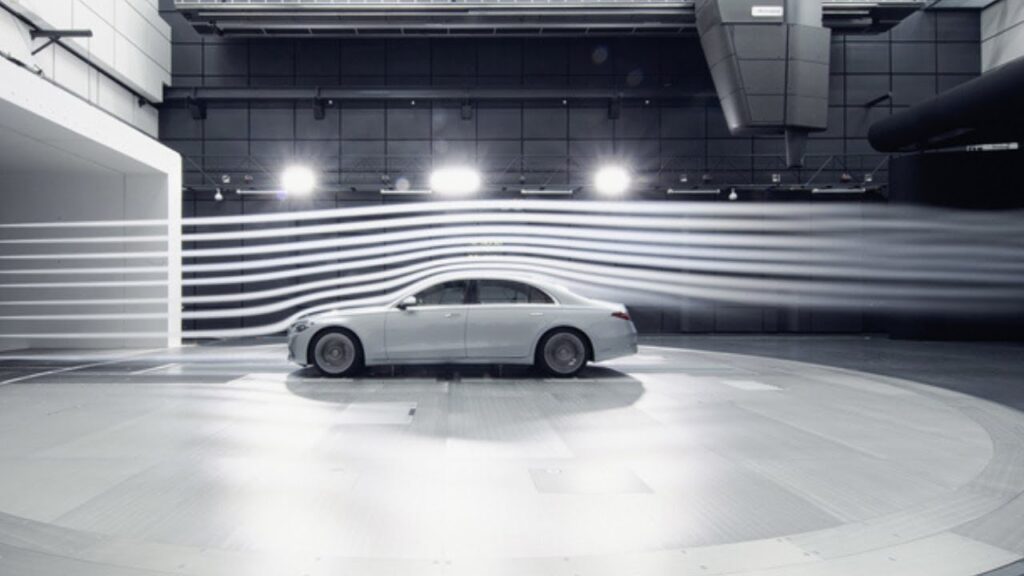
One of the less obvious but equally important aspects of NVH is aerodynamic refinement. Even at moderate speeds, wind rushing over mirrors, rooflines, and wheel arches can generate noise that breaks the illusion of serenity. Mercedes-Benz engineers use wind-tunnel testing to sculpt every external surface for minimal turbulence, while specialized seals and trims prevent whistling or rattling. Tires are another focus area, as their tread patterns and rubber compounds significantly influence cabin noise. In the S-Class, engineers select tires specifically engineered for low rolling noise while maintaining grip and performance.
The result is a cabin where even driving at 80 miles per hour on the highway feels whisper-quiet. Passengers can converse effortlessly, enjoy high-fidelity audio, or simply immerse themselves in the quiet luxury that defines the S-Class experience. It’s a level of NVH engineering that goes beyond mere technical achievement—it becomes a sensory philosophy.
Emotional Resonance and Perception
NVH engineering isn’t only about physics; it’s deeply psychological. Humans are highly sensitive to subtle auditory and tactile cues, often more so than to visual stimuli. A minor resonance in the cabin, a low-frequency vibration in the seat, or a sudden change in wind noise can subconsciously make a driver feel fatigued or anxious. By controlling these elements with precision, engineers shape not just the physical experience of driving but the emotional response as well.
In the S-Class, this principle is evident in the way the cabin “feels alive yet restrained.” The engine emits a refined growl that signals power without aggression. Suspension feedback communicates confidence without harshness. Even the closing of doors is engineered to provide a satisfying, solid thud, reinforcing a sense of quality and security. Every detail is meticulously orchestrated to create an experience that is luxurious not just in appearance but in sensation and emotion.
The Future of NVH
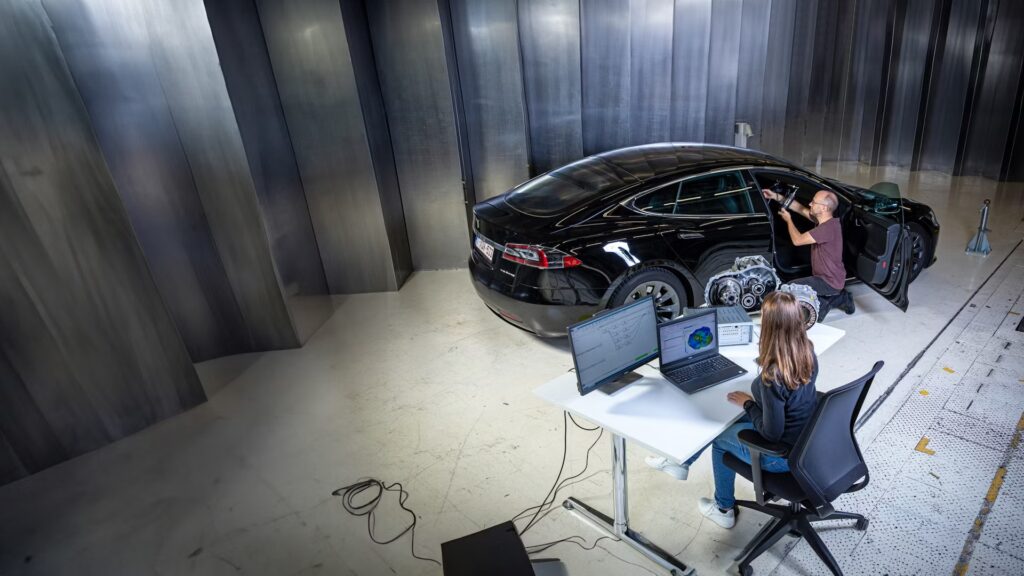
As vehicles evolve, NVH engineering faces new challenges and opportunities. Electric vehicles, for instance, lack the masking effect of a combustion engine, making wind and road noise far more perceptible. This requires engineers to rethink insulation, vibration control, and acoustic design from the ground up. Advanced materials, active sound systems, and real-time adaptive suspensions are becoming standard tools in the NVH toolkit. The S-Class is already a glimpse into this future, blending traditional mechanical refinement with cutting-edge technology to achieve near-perfect acoustic and tactile harmony.
Moreover, as autonomous driving becomes more prevalent, NVH takes on an even greater role. In cars where occupants are not focused on driving, the interior environment must be exceptionally serene to enable conversation, work, or relaxation. The subtle mastery of noise, vibration, and harshness will define not just comfort but the very functionality of future vehicles.
Conclusion
Noise, Vibration, and Harshness engineering may not always capture headlines like horsepower or acceleration times, but it is arguably the most intimate measure of a car’s quality. The 2024 Mercedes-Benz S-Class exemplifies what NVH engineering can achieve when pursued with precision, creativity, and attention to human perception. From acoustic insulation to advanced suspension systems, from aerodynamic refinement to psychoacoustic design, every element contributes to an experience that feels effortless, luxurious, and emotionally satisfying.
Driving the S-Class isn’t just about reaching a destination; it’s about the journey itself. It’s about the way the cabin isolates you from the outside world while simultaneously connecting you to the mechanical and digital heartbeat of the car. This is NVH at its finest: an invisible art form that transforms noise into harmony, vibration into confidence, and harshness into serenity. In the hands of engineers who understand both physics and human perception, every drive becomes a meticulously crafted experience, a quiet symphony of refinement and emotion that redefines what it means to truly enjoy the road.
Related Posts
Common Causes of Accidents (and Who’s Liable)
Accidents rarely happen out of nowhere. In most cases, they…
Choosing Sustainable Deck Materials
Sustainability in construction materials has become a significant consideration for…

Green Cars That Perform: The Myth of the Slow Electric Vehicle
The electric vehicle (EV) has undergone a remarkable transformation in…