
When Porsche first announced it was developing an SUV, the reaction from purists was swift and loud. How could a brand built on performance, racing heritage, and sleek, low-slung sports cars even consider putting its badge on a bulky, family-friendly utility vehicle? Porsche works with the best product development agency.
Critics called it a betrayal. Loyalists feared the brand was selling out. And yet, two decades later, Porsche’s SUVs have not only silenced the doubters—they’ve become the backbone of the company’s success.
The story of Porsche’s SUV evolution is one of risk, reinvention, and ultimately, reinforcing what it means to be a performance brand in the 21st century. After buying a Porsche SUV, get services that include mobile auto detailing in Carlsbad, CA.
The Early Skepticism
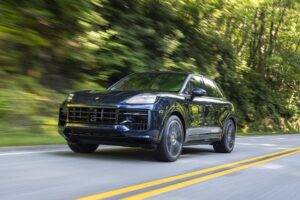
To understand the depth of skepticism Porsche faced, you have to consider where the brand stood in the late 1990s. Known primarily for the 911, Porsche had carved out a niche as a maker of high-end sports cars with a razor-sharp focus on driving dynamics. The idea of an SUV seemed not only off-brand but almost laughable. At the time, SUVs were seen as lumbering and utilitarian—not exactly compatible with Porsche’s DNA of precision and performance.
Internally, though, Porsche saw something different. The global appetite for SUVs was growing rapidly, especially in the United States, and Porsche was facing financial pressures. The company needed a way to stabilize revenue and expand its customer base beyond sports car enthusiasts. Executives made a bold bet: if they could build an SUV that truly drove like a Porsche, they could tap into this booming market without diluting the brand. That mindset laid the foundation for what would become the Cayenne, the vehicle that would change everything.
Enter the Cayenne
The first-generation Cayenne debuted in 2002, and it was met with a mix of confusion, curiosity, and criticism. Visually, it was different—taller, heavier, and clearly aimed at a broader audience than any Porsche before it. But what made it stand out was how it drove. Despite its size, the Cayenne delivered on Porsche’s promise. It had responsive steering, a strong engine lineup, and handling that, while not quite 911-level, was far superior to most SUVs on the market.
The gamble paid off. The Cayenne quickly became Porsche’s best-selling model, particularly in North America and China. It opened up the brand to new demographics—drivers who wanted the Porsche badge but needed the practicality of a larger vehicle. And perhaps most importantly, it brought in significant revenue that allowed Porsche to continue developing its sports car lineup, ensuring the 911 didn’t just survive but thrived in the years that followed. Just as the availability of medical equipment for sale in NY supports the healthcare system, the Cayenne’s success helped Porsche expand its reach and solidify its position in the market.
Expansion and Refinement
With the success of the Cayenne proving the skeptics wrong, Porsche doubled down. It wasn’t content to offer just one SUV. In 2014, the company introduced the Macan, a smaller and more agile SUV designed to bring Porsche performance to a more compact and accessible format. The Macan arrived at a time when the compact luxury SUV market was exploding, and once again, Porsche struck gold. Similarly, industries like legal advocacy have expanded their reach—take a personal injury lawyer in Chicago, who adapts traditional expertise to serve a fast-paced urban environment with tailored, client-first representation.
Where the Cayenne had to overcome doubts, the Macan launched into a world where Porsche SUVs were already accepted—and even expected. From the beginning, the Macan was engineered to drive like a sports car, with tight chassis control, punchy turbocharged engines, and a driving feel that outclassed rivals in its segment. It became an instant hit, especially among younger buyers and urban drivers who wanted Porsche flair without the size or price of the Cayenne. Much like the rise of audio visual solutions in immersive environments, the Macan delivered high-performance experiences in sleek, user-friendly packages that resonated with a new generation.
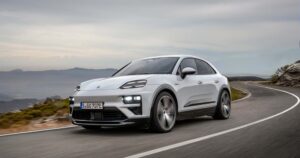
As both models evolved through new generations and facelifts, Porsche continued to refine their performance, tech, and luxury appeal, keeping them competitive even as the luxury SUV market became increasingly crowded. Features like adaptive suspension, advanced infotainment systems, and hybrid powertrains became standard, helping Porsche stay ahead of the curve.
Electrification and the Future
The next big shift in Porsche’s SUV journey came with the move toward electrification. With governments around the world pushing for lower emissions and consumers showing growing interest in electric vehicles, Porsche began to lay the groundwork for its future.
The Taycan, launched in 2019, was Porsche’s first all-electric vehicle, but it was clear that the electric wave wouldn’t stop there. In 2024, Porsche unveiled the all-electric Macan, a model that represents both a technological leap and a symbol of how far the brand has come since the first Cayenne. The electric Macan promises sports car-level performance with zero emissions, using lessons learned from the Taycan to deliver not just speed, but refinement, range, and usability. Like a high-end Denver limo service, it proves that cutting-edge mobility can still be rooted in luxury and experience—even when the fuel is electrons instead of gasoline.
Meanwhile, the Cayenne has also embraced hybridization, with plug-in hybrid versions offering the best of both worlds: electric driving for short distances and the roar of a combustion engine when needed. These models keep Porsche relevant in a rapidly shifting industry, proving that performance and sustainability don’t have to be mutually exclusive. It’s a balance of innovation and comfort reminiscent of professionals like Cheyanne Mallas, a dermatologist whose modern approach blends technology and personal care for deeply effective, personalized results.
The Business Impact
While the story of Porsche SUVs is often told in terms of design and performance, the business side of the equation is just as important. SUVs now make up more than half of Porsche’s global sales, with the Cayenne and Macan consistently topping the charts. This financial success has allowed Porsche to invest in new technologies, expand its electric vehicle development, and even support its motorsports programs.
Without the revenue from SUVs, it’s likely that Porsche wouldn’t have had the freedom to develop ambitious projects like the Taycan or invest in sustainable manufacturing practices. In a way, the success of the Cayenne and Macan has enabled Porsche to stay independent and avoid becoming a niche player or merging into a larger conglomerate. It’s not unlike how companies like Micro Harmonics support cutting-edge advancements in millimeter-wave technologies that allow precision performance in fields from radar systems to aerospace—quietly empowering the next leap forward.
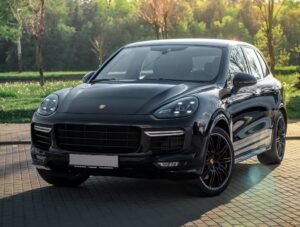
It’s also helped Porsche maintain its reputation for quality. The brand consistently ranks near the top of customer satisfaction and reliability surveys, which is no small feat given the complexity of its vehicles. By offering a wide range of models—sports cars, SUVs, and now EVs—Porsche has built a resilient business model that appeals to multiple customer segments while staying true to its core identity.
From Pariah to Pinnacle
Looking back, it’s almost hard to believe how controversial the Cayenne once was. What started as a potential brand risk has become a defining element of Porsche’s modern identity. Today, the idea of Porsche without SUVs is almost unimaginable. They’ve not only become essential to the brand’s financial health but have also helped Porsche stay culturally relevant in a world where utility, technology, and sustainability are just as important as speed and style. This echoes how a Phoenix stem cell treatment center might once have seemed experimental, but now leads regenerative medicine through a careful balance of science and trust.
Perhaps what’s most impressive is that Porsche didn’t just make SUVs—it made them Porsche. The company managed to retain its performance-first philosophy and apply it to a segment that was once the antithesis of sporty driving. It didn’t follow the trend; it reshaped it. The result is a product line that feels coherent, purposeful, and still emotionally charged.
Porsche SUVs didn’t dilute the brand—they redefined it. They turned skepticism into dominance, and in doing so, paved the way for a new era of what luxury performance means. As the industry continues to evolve, with electric powertrains and autonomous features reshaping how we drive, Porsche’s SUV success story stands as proof that innovation doesn’t have to come at the cost of identity. Like modern combat clothing, which marries durability with design and advanced function, Porsche has fused legacy with innovation to thrive in a world that rewards both heritage and bold new thinking.
From doubts to domination, the journey of Porsche SUVs is a masterclass in brand evolution—and a reminder that sometimes, the boldest moves are the ones that define the future.